
ISI - PSYC 3110 - Abnormal Psychology
Course Description
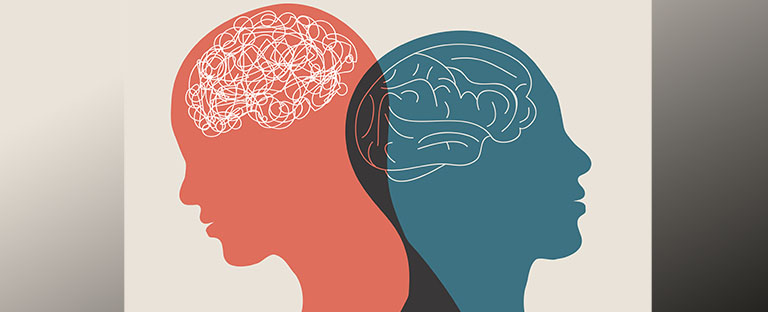
Abnormal Psychology studies the nature, causes, treatment, and prevention of patterns of emotional disturbances and personality disorders, including neuroses and psychoses.
This course will provide an introduction to abnormal psychology by presenting an interactional view of abnormal behavior involving personal attributes and the challenges that people confront in life. The interactions of life situations, vulnerabilities, and resiliency influence the development of disorders, treatment plans, and clinical outcomes.
Traditionally, it was believed that biology drove most of everything and that biological defects always underlie maladaptive behavior. Biological determinants are pertinent; however, there is growing evidence that the environment can have a major impact on biological processes; for optimal outcomes, treatment typically requires a combination of elements such as medication and psychotherapy. Our focus is on the complexity of human behavior and the elements that contribute to the development of adaptive and maladaptive behavior. Research is central to the study of human behavior because new evidence greatly influences how we understand people with problems.
Throughout the course, you will be asked to look internally at your behavior and externally to the environment around you. Consider how you adapt and cope with your environment, and observe the behaviors of others. Ask yourself: What is considered normal behavior? What is considered abnormal? Why?
Learner Outcomes
- To gain an appreciation of the fundamental issues that underlie the concept of mental abnormality. These issues include such questions as:
- How does one define mental disorder?
- Is the definition of mental illness relative, depending on society or on historical context?
- What tools are used to assess mental disorder and how are they used?
- What are the consequences, both practical and ethical, of classifying individuals? Can such classification be made accurately and reliably?
- To become familiar with how, in terms of symptoms, the various psychological disorders present themselves.
- To appreciate different explanations of abnormality. That is, to understand the role of environment, genetic factors, psychodynamics, neuropsychology, and biochemistry in the determination of psychopathology.
- To appreciate the experience of mental disorder. This will be accomplished through the use of case histories and similar material.
Required Course Materials
- Bernheim, Kayla F. The Lanahan Cases and Readings in Abnormal Psychology. 2nd ed. Baltimore:Lanahan Publishers, Inc., 2004., ISBN-10: 1930398069, ISBN-13: 9781930398061
- Sarason, Irwin G., and Barbara R. Sarason. Abnormal Psychology. 11th ed. Upper Saddle River:Prentice Hall, 2005., ISBN-10: 0131181114. ISBN-13: 9780131181113 Hardcover or, ISBN-10: 8120326636. ISBN-13: 9788120326637 Paperback
Sponsor Institution
Credits earned for this course are included in a University of Idaho transcript.
This is an INDEPENDENT STUDY IN IDAHO course
To learn about program and refund policies, visit www.uidaho.edu/isi.
Still have a question? Submit an ISI Support Request.
COURSE NUMBER NOTICE
Beginning with the 2025-2026 Catalog year, the University of Idaho transitioned to 4-digit course numbers. As ISI works through this transition, you may continue to see 3-digit course numbers during this time. A crosswalk is available online.
Prerequisites
PSYC 101 Introduction to Psychology- ISI - PSYC 1101 - Introduction to Psychology (Complete)
- EP0034 - ISI - Pre-Req of PSYC 1101