
ISI - PHYS 1152 - Descriptive Astronomy
Course Description
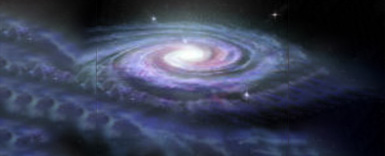
Descriptive Astronomy is a survey of the historical and modern observation of the sky. Physical relationships in the solar system; planets, satellites, comets, etc., and theories of the creation of the universe and life in the universe.
This course is designed for students who have little or no mathematical or scientific background. But, it can also be appreciated by those with more advanced technical educations. Astronomy is the oldest of all the sciences. Many modern fields of scientific endeavor have their roots in astronomy. Likewise, astronomy embraces these sciences, from geology in planetary formation, to chemistry with the nuclear properties of the atom, and to mathematics in the study of orbital mechanics. Astronomical research cannot, in fact, be separated from these and other fields of science. To fully understand astronomy is to appreciate many other areas of the physical and mathematical sciences.
Astronomy has developed significantly over thousands of years. Early astronomy was entangled in pseudoscience like astrology and in pagan religious rites. Modern astronomy has progressed far past these non-scientific beginnings. Your textbook uses astronomy as a tool whereby you, the student, can be made aware of the flow of scientific ideas from one mind to another. Of even greater significance, however, it shows the interdependence of the work of one person upon that of another.
This particular text has been chosen for several reasons. The text will lead you from a study of astronomical objects with which most of you are familiar, like the Moon and the Sun. Then it will guide you to a greater appreciation of the planets, then to a consideration of more distant objects such as stars, galaxies, and quasars. Finally, it gives a view of the Universe as a whole with a discussion of its origin and future. It does all of this in a most readable fashion. The authors are more educators than they are simply scientists; you'll find their style very simple, yet comprehensive.
Learner Outcomes
The objective of this course is two-fold. The first is to present, in a broad spectrum, the spirit of scientific investigation and to develop an understanding of the scientific method. Although we use the motif of astronomy, the methods we develop here can be applied to all sciences. While doing this, our second objective is to instill in you an appreciation for the observable Universe. Particularly, you will learn how astronomers are able to discover the nature of planets, stars, and galaxies by applying the laws of physics to faint glimmers of light coming from the stars. To accomplish these goals, concepts are developed with reference to everyday experiences.
Required Course Materials
Arny, Thomas T., and Stephen E. Schneider. Explorations: An Introduction to Astronomy. 6th ed. Boston: McGraw-Hill, 2010. ISBN-10: 0-07351217-6 ISBN-13: 978-007-3512174.
Sponsor Institution
Credits earned for this course are included in a Idaho State University transcript.
This is an INDEPENDENT STUDY IN IDAHO course
To learn about program and refund policies, visit www.uidaho.edu/isi.
Still have a question? Submit an ISI Support Request.